
This morning I found myself standing at the window, looking out at the yard on one of the coldest days we’ve had this winter. With wind chills dipping to nearly 25 below zero here in Michigan, it felt like the perfect moment to start thinking about spring.
Call me crazy, but I truly love snow and all that winter brings. There are few things more peaceful than a fresh blanket of snow, and days like this make home feel especially cozy. I love being tucked inside, making soup and homemade bread for my family. Being home together like this is my favorite part of winter.

Days like this are also a reminder that winter is the quiet planning season. While the ground is frozen solid, there’s still plenty we can do to get ready for spring in a slow, thoughtful way.
Our family loves gardening. We live in a subdivision — and even with limited space, we’ve found plenty of room to grow. It just takes a little creativity. On our small, half-acre neighborhood lot, we grow tomatoes, peppers, cabbage, kohlrabi, cucumbers, herbs, pumpkins, garlic, raspberries, strawberries, lettuce, rhubarb, carrots, beans, peas, and more.
Keeping a yearly garden journal has become one of the most helpful parts of my gardening routine. It helps me stay organized, plan ahead, and learn from year to year — and it’s something I genuinely enjoy working on during the winter months. There’s no single right way to keep a garden journal, but for me, it’s the backbone of how I think about and plan our garden each year.
Below are the simple steps I return to each winter as I begin planning for the season ahead.
5 Simple Steps to Plan Your Spring Garden
Winter offers time to think without the pressure to act right away. These simple steps help me move into spring feeling prepared rather than rushed. Here’s how I begin thinking about my spring garden.
1. Notice what worked last year
Before making any plans, I like to look back — not to judge or fix anything, but simply to notice. A few honest observations about last season can shape better decisions for the year ahead.
It can help to jot down a few notes in your garden journal:
- What grew well last year?
- What struggled or didn’t thrive?
- What did I actually use and enjoy in the kitchen?
- What took more time or space than I expected?
For me, this reflection always brings clarity. Last year, for example, I realized that a little okra and a few radishes go a long way for our family.
2. Decide what matters most to grow
Once I’ve looked back, I can look ahead more intentionally. Instead of trying to grow everything, I focus on what fits our life right now — the foods we cook often, plants I enjoy growing, and what makes sense for the space and time I have.
A few questions that help narrow things down:
- What do we actually eat and enjoy most?
- How much time do I realistically want to spend in the garden?
- Is there one new thing I’d like to try this year, just for fun?
This step isn’t about doing more. It’s about choosing what matters and letting the rest go.
3. Sketch your garden space
A simple hand-drawn sketch is enough. I like to note where the sun hits, where things grew last year, and where I might want to try something new. This helps prevent overbuying seeds and makes the plan feel more real.
4. Check your timing, not just your ideas
Winter is a good time to look up seed-starting windows and planting dates for your zone. Having a general sense of when things happen makes spring feel calmer and more manageable.
I like to jot down when seeds need to be started indoors and when different crops can go outside so I’m not guessing later.
5. Gather slowly
Order seeds, clean containers, and take stock of what you already have. There’s no rush — planning now lets spring begin feeling steady instead of hurried.

Why plan your garden in winter?
Planning ahead gives you access to a wider selection of seeds before favorites sell out in spring. If you plan to start seeds indoors, many need to be planted weeks before your last frost date, so having a rough timeline early helps everything feel more manageable later.
Winter planning also keeps you connected to the garden during the colder months. Even when the ground is frozen, there’s something satisfying about flipping through seed catalogs, making notes, and imagining what’s to come.
Most of all, a simple plan helps spring feel less rushed. Knowing roughly what you want to grow — and when — makes it easier to enjoy the season as it unfolds.

A note on purchasing seeds
I like to order seeds early, usually in January or February, after seed catalogs start arriving and I’ve had time to think things through. It’s easy to get carried away — there are so many beautiful varieties — so I always refer back to my garden journal before ordering.
When choosing seeds, I keep a few things in mind:
- Heirloom seeds are open-pollinated and can be saved year to year. These are usually my first choice.
- Hybrid seeds are bred for specific traits but don’t produce true seeds if saved.
- GMO seeds are lab-created; I choose not to use them.
I also check that each plant grows well in my zone (Zone 6a here in mid-Michigan) and note whether seeds need to be started indoors or can be direct-sown.
If starting seeds indoors isn’t appealing, there’s no shame in buying seedlings from a local garden center. Gardening should fit your life.

Planning seed-starting date
Once seeds arrive, I sort packets into two piles: Start Indoors and Direct Sow. For indoor starts, I count backward from my planting date rather than my last frost date — I usually plant around Memorial Day weekend to play it safe — and note those dates in my journal and calendar. I created the chart below for my zone – 6a.
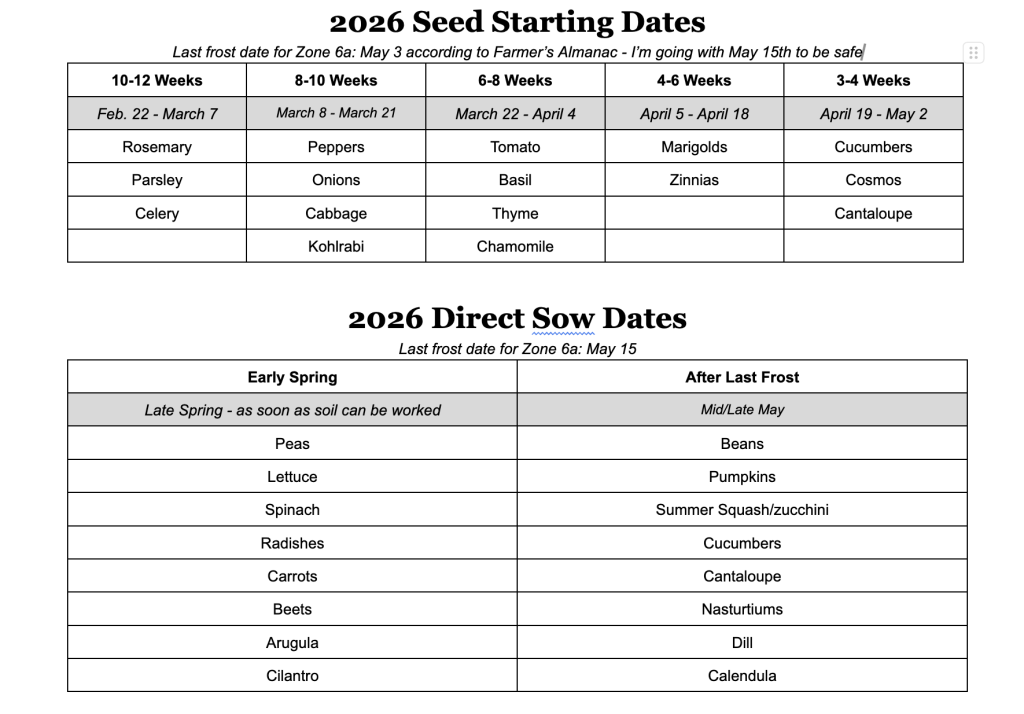
This keeps everything in one place and helps the season unfold smoothly.

Audrey Hepburn once said, “To plant a garden is to believe in tomorrow.” It’s a simple reminder of why this work feels so meaningful, season after season. 🌿
Lindsay
Extra Resources *
- Farmers Almanac – Find last frost date
- Garden Journal
- My favorite gardening book: Guide to Michigan Vegetable Gardening
I’ve ordered seeds from several companies over the years, including Gurney’s, Burpee, and True Leaf Market. I’m not affiliated with any of them — they’re simply ones I’ve used and liked.
*Some links in this post may be affiliate links. If you choose to purchase through them, I may earn a small commission at no extra cost to you.
Leave a Reply